-
-
Metal One’s businesses and roles
-
Plate, Construction & Tubular Products Business Division
-
Flat Products Business Division
-
Global Business Division
-
Global Marketing & Energy Project Business Division
-
Wire, Specialty & Stainless Steel Business Division
-
Digital transformation
-
Carbon neutrality
-
Business creation and innovation
-
-
Recruiting information
-
Terms of Use
Carpenter’s Plane Smithy

Carpenter’s Plane Smithy
Nishiwaki
A Young Smith Absorbed in the Joys of Working with Iron
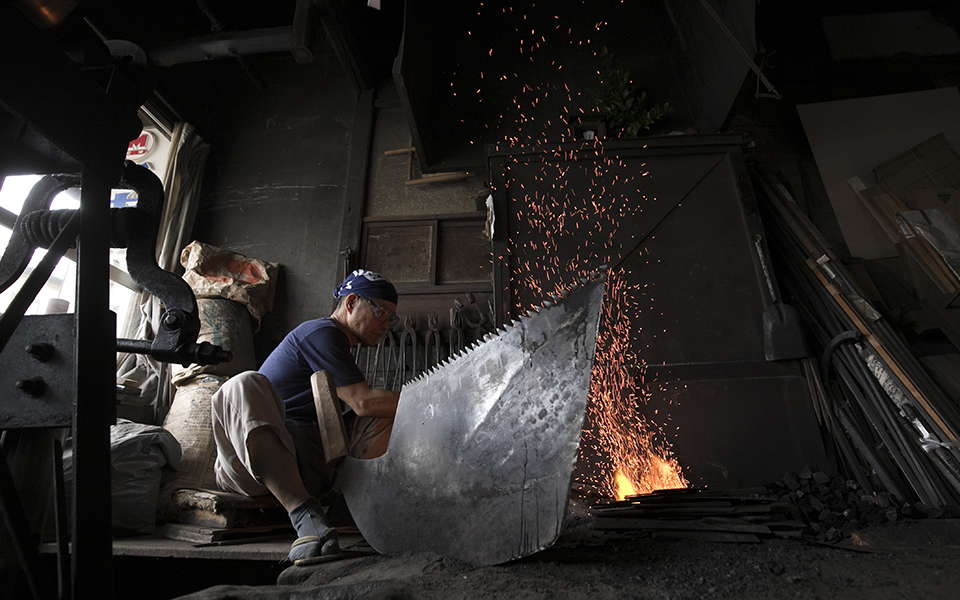
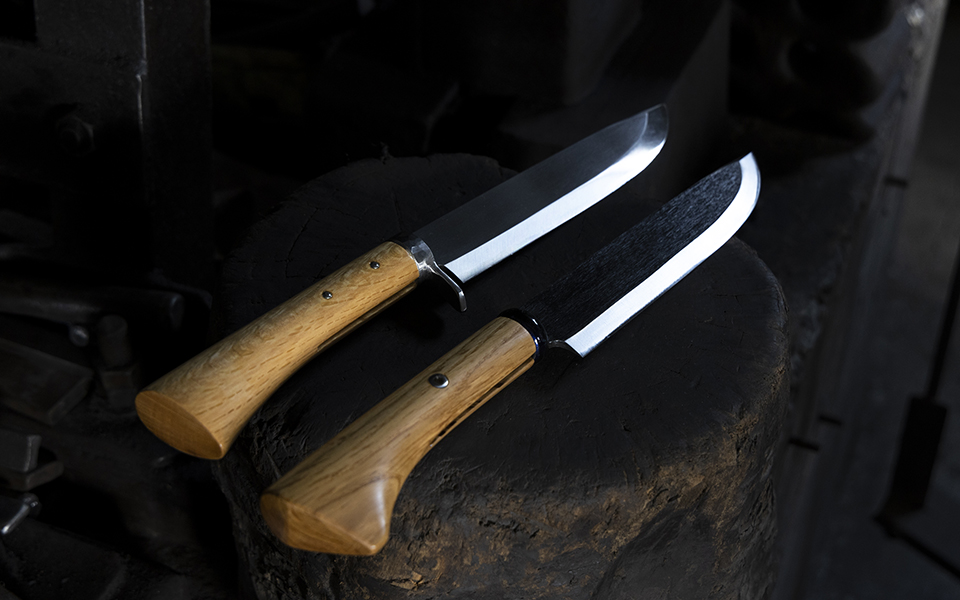
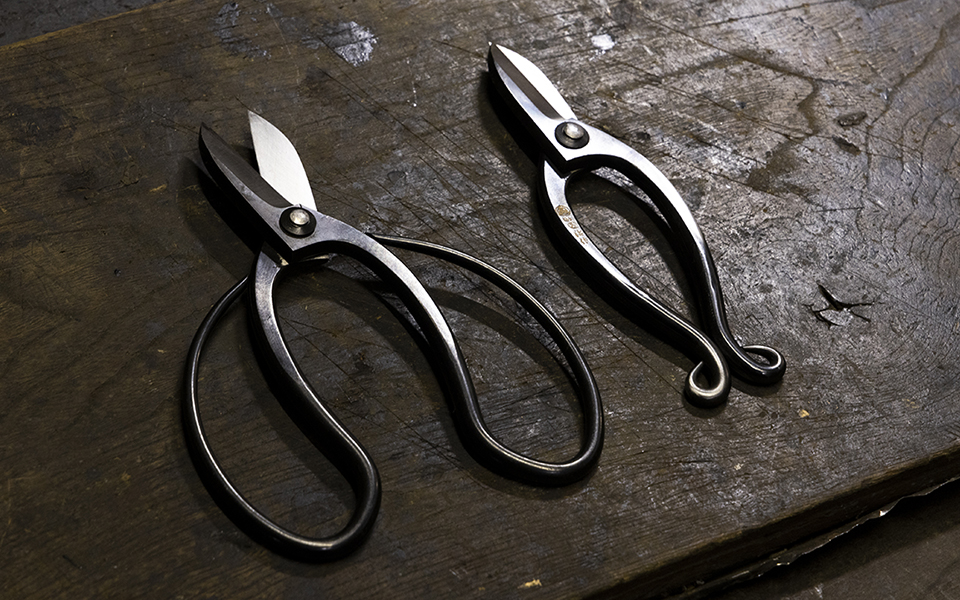
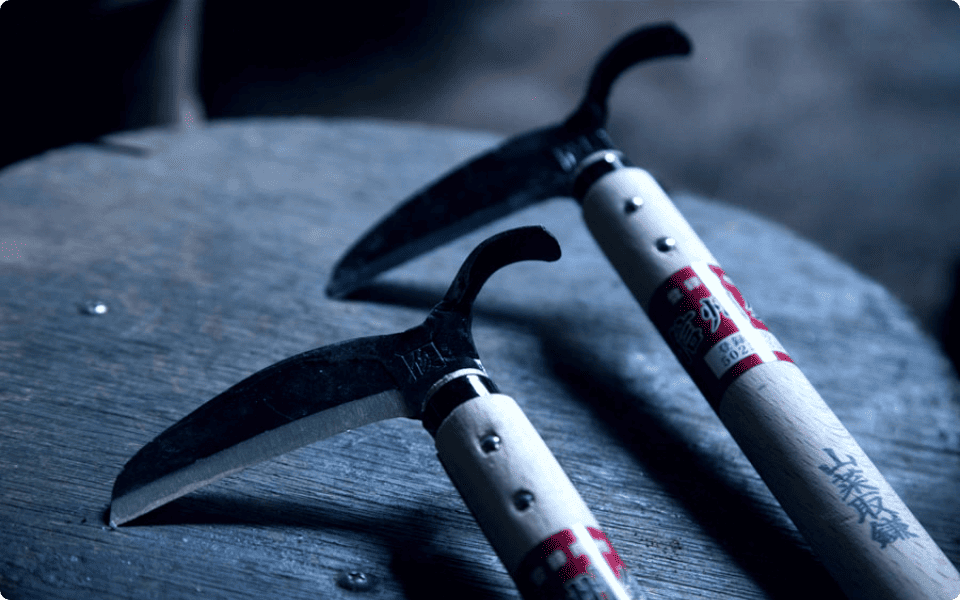
The forging of cutlery in Japan has its origins in swordsmithing, and is one of the country’s premier traditional crafts, evolving in modern times to the fashioning of knives, handsaws, planes, scissors and various other tools. Most smithies were inherited over generations as family businesses, each family passing down its techniques and creative ethos to the generations that followed.
The average age of blacksmiths has increasingly risen in leading manufacturing areas throughout Japan, however. Cheap industrial goods available at home centers are also pushing them out. There are concerns that forged tools made by hand will cease to exist.
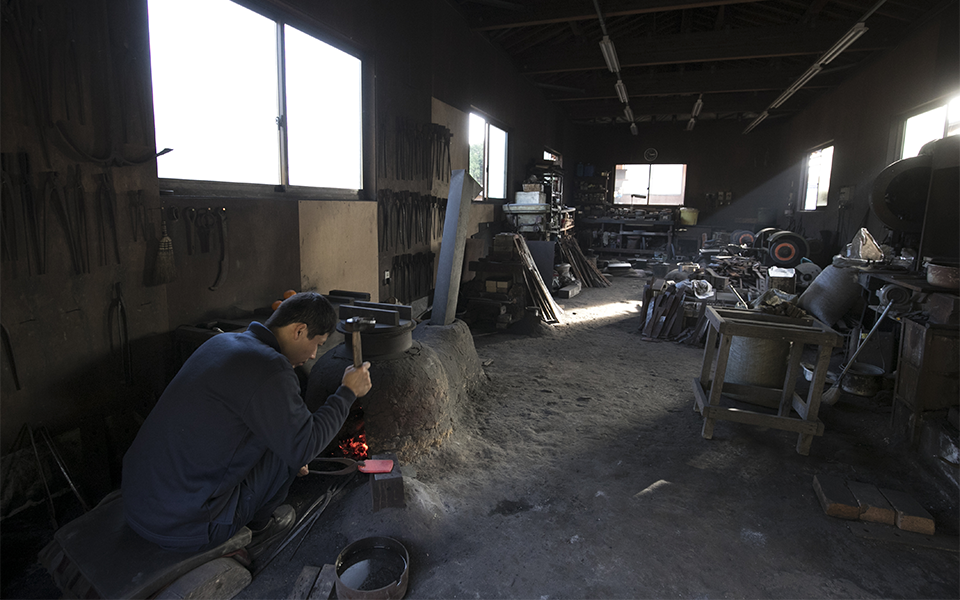
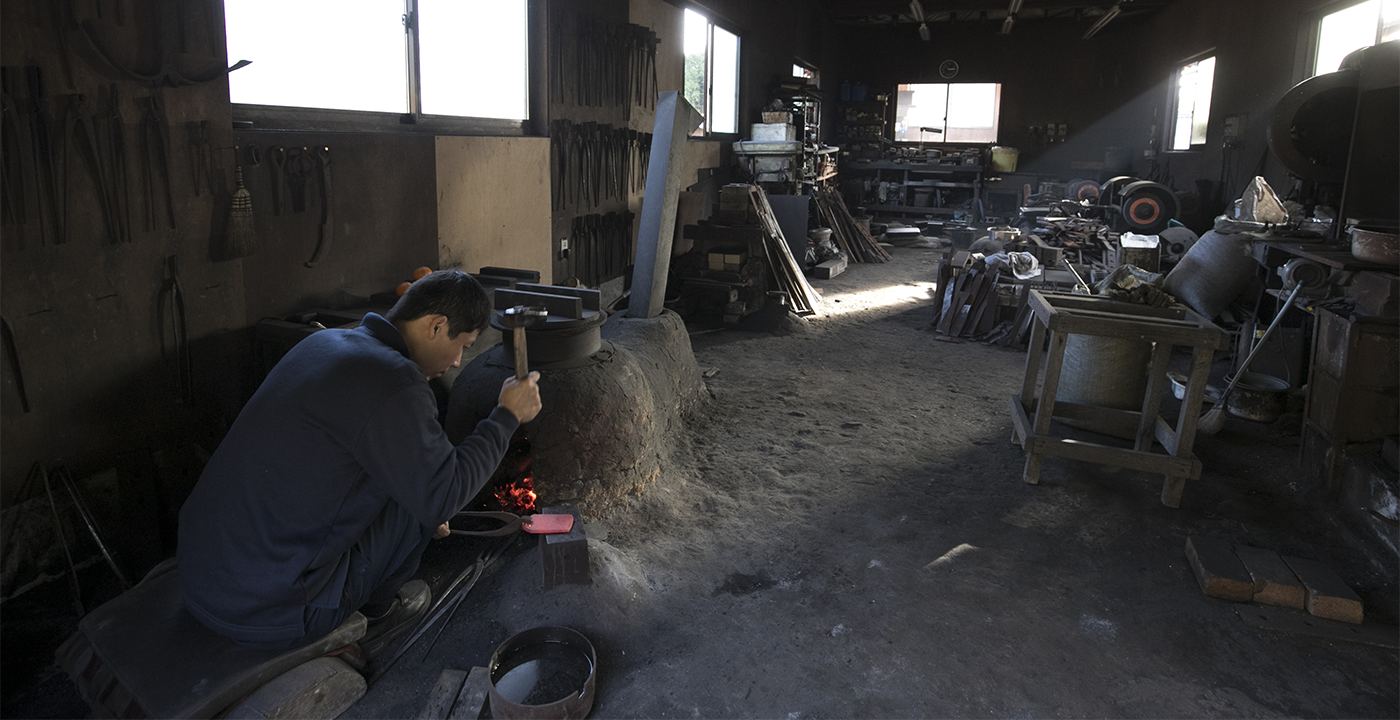
In the midst of this, a rare young smith plunged into this realm, fascinated by the fun of working with iron. Keisuke Uchihashi, 39, has a carpenter’s plane smithy in Nishiwaki, Hyogo Prefecture. After graduating from high school, Uchihashi apprenticed at a carpenter’s plane smithy in Miki (also in Hyogo Prefecture)—an area that boasts about four centuries as a carpenter’s tool production region—for five years before going independent. Inheriting hammers, scissors and other implements from smiths who went out of business, he built a workshop near his home.
“Blacksmithing is really interesting and fun,” Uchihashi says. While adhering to traditional Miki blacksmithing techniques, he has also amassed research and ideas to produce his Keizaburo brand planes, which are quite popular among carpenters.
“You can acquire the skills of making planes in a year or so,” he notes. “More than that, however, continuing to make things that have the same quality is more difficult,” indicating that his approach is to avoid getting bogged down in the usual practices and thoroughly master blacksmithing.
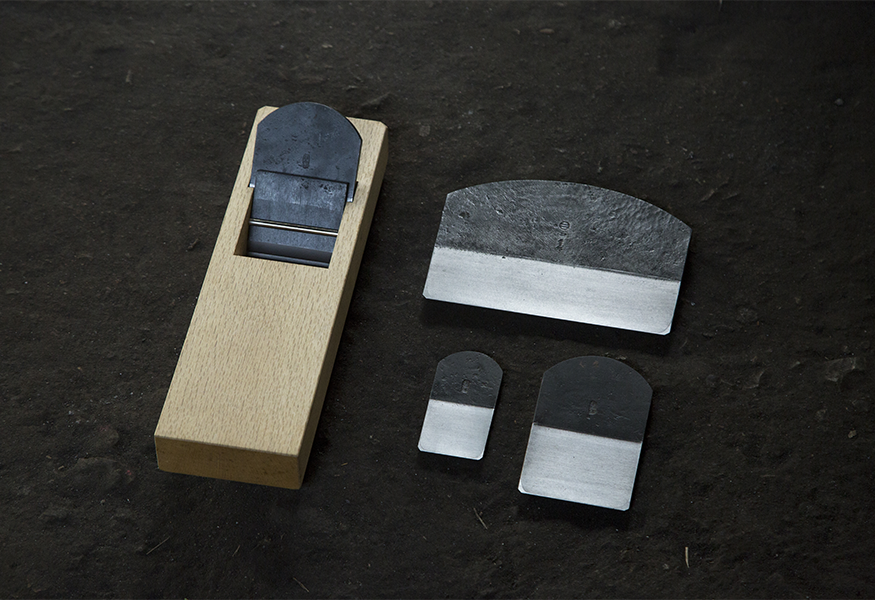
Tsuchida Hamonoten (Tsuchida Cutlery Shop) in Tokyo’s Sangenjaya district was established nearly one hundred years ago. The shop sells carpentry tools made by blacksmiths all around Japan. President Noboru Tsuchida noticed young Uchihashi’s blacksmithing early on, and rates it highly. “In an industry in which aging is a serious issue, it’s a hopeful sign that a youngster like Uchihashi is working hard. His planes are back-ordered for two years, and his skill levels are splendid.”
While he listens to the opinions of Tsuchida and the carpenters who use his handcrafted planes, Uchihashi always aims for new heights. He indicates that his next goal is to at some point train young artisans. Calling upon his own experience of going independent when young, he also shows an interest in personal development systems for training people that aspire to be blacksmiths.
Given the flexibility in his thinking to avoid getting caught up in tradition combined with his curiosity “to pursue interesting and fun things above all,” Uchihashi is a bright spark in Japan’s blacksmithing future.
Value One 2020 No.67